The base file includes the initial bump as that wouldn't be animated by the animator it would be procedurally generated using Torsten Reil's program. For the purposes of this test i've focused on the bump from one direction. This file hasn't been timed because it isn't one of the animated responses, the next 7 tests will be.

Showing posts with label pre production. Show all posts
Showing posts with label pre production. Show all posts
Tuesday, 22 January 2013
22/1/13 - Base Walk FoF Test
I've spent today finishing off the base file for the 7 Fight or flight animations.

Friday, 18 January 2013
18/1/13- NPC categories importance
I identified a fair while back before my project properly formed that there were different types of NPCs like there are different types of extras in films.
Background Characters
Background characters in games as in films are there to make a world feel more realistic, they generally have no sway in the main storyline and only in some games with a lot of side "quests" do they really have any direct influence on a character's decision. In most games the player has very few ways of interacting with the player.
Why is this important to consider?
Background Characters
Background characters in games as in films are there to make a world feel more realistic, they generally have no sway in the main storyline and only in some games with a lot of side "quests" do they really have any direct influence on a character's decision. In most games the player has very few ways of interacting with the player.
 |
| GTA4 Background NPCs |
 |
| Skyrim Background NPC |
Minor NPC's
These are the character's which may have a part to play in a side quest and may be encountered multiple times in one game. They will need to have more personality than a background character because of the increased need for interactions. An example of a minor NPC is Ysolda in Skyrim. She asks you to get a mammoth tusk for her to help her enter the world of business. She has a name and you can perform more interactions than a background character and her mini storyline can result in the world changing slightly with her taking over one of the buildings but there is no influence on the main storyline and it wouldn't matter if you didn't finish her quest or even speak to her at all.
 |
| Ysolda, Skyrim Minor NPC. |
Major or Pivotal NPC
The most important and most detailed characters in terms of backstory and level of interaction available, pivotal characters have direct sway on the main storyline. For example Walter in Fable 3, or Roman in GTA4
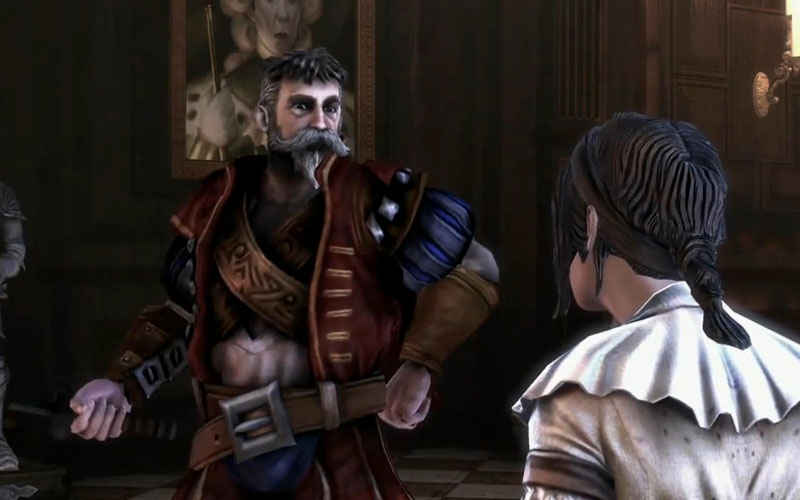 |
| Walter ,Fable 3 |
 |
| Roman, GTA4 |
Bringing the categories up again now is vital. As in a previous post where I expressed the difficulties of creating one animation library for different builds and genders of the characters, the type of NPC I create the library for will affect the level of detail the library goes into. There would be no need for a background NPC to have an animation for greeting the player unless the background NPC specifically was required to like a waiter or doorman.
------------------------------------------------------------------------------------------------------------
To Do:
Game specific animations (animations that are only required for specific games)
Thursday, 17 January 2013
17/1/13 - Fight or Flight part 6
Storyboards today, i'll add the fight storyboard from before so i can find them all in one place.
Likert 1: Fight

Likert 2: Yell
 Here you can see after the push the NPC becomes immediately enraged. He begins to turn, arms raised inviting the player to attack, in the fourth frame it shows the NPC is pursuing the player for a short while still with his arms raised and beckoning. The NPC would also make short sharp movements towards the player as if beginning an attack using the principle mentioned before about testing their opponents' reactions. The main difference between this and the Extreme Fight reaction is the lack of physical interaction, the NPC will likely yell and threaten the player but quickly give up chasing and return to their original position.
Likert 3: Comment

Again this one has a slight difference to the Yell storyboard. The initial reaction is the same but the cool down time is much quicker and instead of pursuing the player the NPC turns and remarks to who they're talking to. The only problem with this is what if the NPC isn't around any others, this would make it seem like they were gesturing to thin air, for that reason this storyboard is more appropriate.


Likert 1: Fight

The NPC fight reaction is pretty much the most instinctual reaction. The character is angry possibly already wound up for some reason and so a slight brush past would cause an immediate burst of aggression in this instance resulting in pushing the player to the ground, the aggression continues with a threatening display leaning over the fallen player to express a dominance over them.
Likert 2: Yell

Likert 3: Comment

Again this one has a slight difference to the Yell storyboard. The initial reaction is the same but the cool down time is much quicker and instead of pursuing the player the NPC turns and remarks to who they're talking to. The only problem with this is what if the NPC isn't around any others, this would make it seem like they were gesturing to thin air, for that reason this storyboard is more appropriate.

The change to the arm being held closer to the body and the direction of the eyes pointing to the ground suggests that the secondary reaction is more of an internal question than an external one. As if the NPC is asking itself how someone can be so rude as opposed to someone else. The pose can maintain a sense of aggression with the other hand clenched slightly and held tightly to their side while the shoulders remain slightly hunched and stiff.
Likert 4: Neutral

The third frame of the neutral storyboard is mainly showing the NPC catching themselves, the fourth frame is not far different showing the NPC acknowledges the player showing the NPCs thought process the NPC would then default back to its starting position as if thinking no more about the incident.
Likert 5: SideStep

This reaction is the least extreme flight reaction, it shows that the NPC found the experience mildly alarming. The body language is that of someone whose cautious and wary of what just happened. The first pose similar to the more extreme is one of checking to see what just happened, not sensing too much danger they move to the second frame which displays the side of their body towards the player hiding vital organs from harm but still able to keep an eye on the possible threat.
Likert 6: Brisk Walk

The main features of the brisk walk are the apparent nervous tells that the NPC displays.. They aren't frightened enough to properly run but they find the situation uncomfortable enough to want to leave the area. This could result in a brisk walk with frequent glances at the perceived threat. The fourth frame clearly displays the way a character could sidestep into a brisk walk to help distance themselves before walking checking that they won't be followed.
Likert 7: Flight

The setting that this reaction would be likely in if the player had a particularly high notoriety possibly from behaving with extreme violence in the past here or has a reputation for it from elsewhere. The NPC just wants to get as far away as possible as quickly as possible. The main focus of the flight reaction would be the moment of recognition before the run. Here that is demonstrated by the fairly relaxed pose in the third frame, the NPC has relaxed hands and a stable footing to counteract being put off balance, whereas in the fourth frame the NPC is much more nervous, the shoulders become hunched protecting the neck area, the hands and legs start to buckle in the direction he's about to run and he's straining to look at the player as if to keep an eye on where he is. Throughout the run that follows the NPC should continue to look behind him from time to time to check if the player is following.
Slightly alternative second pose stressing the wanting to keep an eye on the threat. Could easily lead into the second reaction frame above...

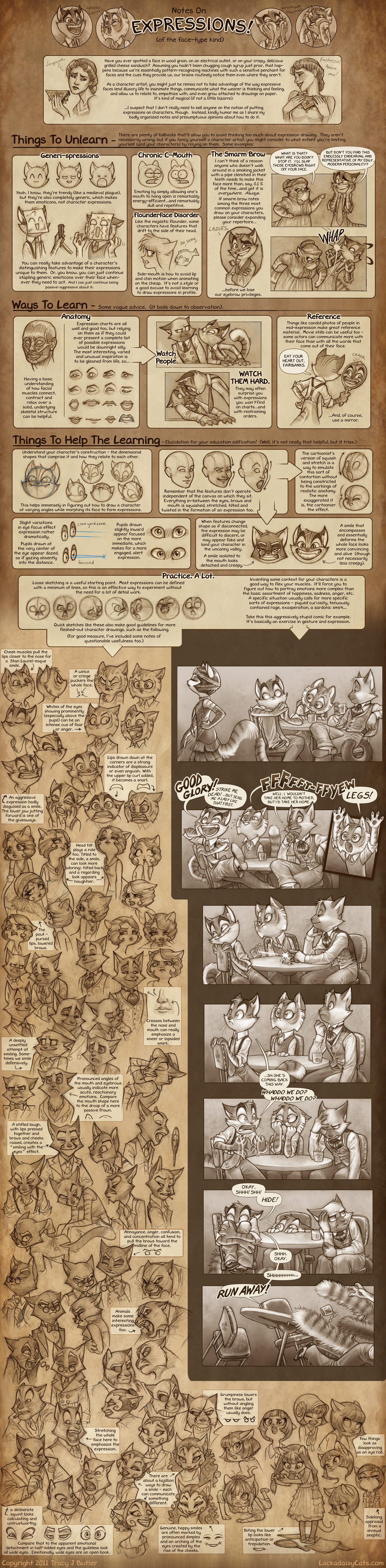
Facial expression practice
Main influence for trying to get the hang of facial expressions is this tutorial which i printed out a fair while back to have as a poster for ever and ever... i'll be paying closer attention to it when i practice.
Wednesday, 16 January 2013
16/1/13 - Fight or Flight part 5, practice
Continuing from yesterday today is mainly about collecting a little more reference footage and getting some more storyboards done.
Today's reference footage went a lot better, a lot more focused and the performances show that. Here's some stills.


The walk cycle from yesterday is finished enough for me to begin doing proper tests as soon as I've got the storyboards done.
I've spent some time sorting through my posts and labelling them ready for submission today so I haven't got round to making any more storyboards.
Personal development
Over the past semester when I've had a moment spare or needed a rest from the rest of my coursework I've been brushing up on my drawing skills. Here's an assortment of those practice sketches.
The first collection is when i was trying to improve on drawing faces, specifically facial expressions. When storyboarding it makes my life a lot easier if I can record the facial expression i first thought of and so being able to draw them well is a necessary skill. Below you can see an assortment of facial poses in Maya using photos as reference practices of drawing expressive eyes, figuring out the structure of the lips and practices in the proportion of faces both realistic and stylized.


This collection of hands I started last night after yesterdays post highlighted how badly I needed to improve. I haven't left any images out so that i can see where i'm going wrong more clearly. I'm going wrong a lot for now.


Today's reference footage went a lot better, a lot more focused and the performances show that. Here's some stills.

1.1: (Likert Scale 2: Yelling)

1.2

1.3

1.4

2. (Likert scale 6: Run) Initial reaction

3. (Likert scale 2: Yelling)
The walk cycle from yesterday is finished enough for me to begin doing proper tests as soon as I've got the storyboards done.
I've spent some time sorting through my posts and labelling them ready for submission today so I haven't got round to making any more storyboards.
Personal development
Over the past semester when I've had a moment spare or needed a rest from the rest of my coursework I've been brushing up on my drawing skills. Here's an assortment of those practice sketches.
The first collection is when i was trying to improve on drawing faces, specifically facial expressions. When storyboarding it makes my life a lot easier if I can record the facial expression i first thought of and so being able to draw them well is a necessary skill. Below you can see an assortment of facial poses in Maya using photos as reference practices of drawing expressive eyes, figuring out the structure of the lips and practices in the proportion of faces both realistic and stylized.


This collection of hands I started last night after yesterdays post highlighted how badly I needed to improve. I haven't left any images out so that i can see where i'm going wrong more clearly. I'm going wrong a lot for now.


Tuesday, 15 January 2013
15/1/13 - fight or flight part 4
In yesterdays post I used a 7 point Likert Scale when assessing the degree of fight or flight for a reaction as opposed to a 5 point scale previously mentioned in the post. This was because when thinking back to past situations I recorded the reactions I had down were still too extreme for the more gentle interactions, imagine if you brushed past someone lightly and immediately they either started yelling at you or nervously walking away at a brisk speed. Although initially this would be quite entertaining in a game it would annoy the player soon after. Because of this, the expanded 7 point scale makes more sense.

As you can probably tell I've fallen behind my schedule quite rapidly due to needing to explain the new system and certain tasks such as editing and analysing game footage taking much longer than I anticipated. Today I will be creating and uploading live motion footage for reference material and producing storyboards based on them and the body language explored. If there's time I'll start animating today as well.
Live motion reference
Short example as to why this sort of reference is hard to capture...
The main challenge encountered has been how to capture a natural reaction the amount of times, I needed to stress that I didn't want them to act like an NPC pretty often and many of the attempts they would react before being hit. We attempted a few strategies to help them react more realistically like closing their eyes or being bumped into from behind so they weren't expecting it and on a couple of occasions this paid off.
I think there might be some footage I can use but i'd like to film more with new tactics to try and get some more reference.
I won't be uploading the reference footage to the blog as there's a ridiculous amount of it and editing the footage to upload wouldn't be the best use of my time.
Storyboards
First pass storyboards which may change with the new reference footage. Only one for now. More tomorrow
1. Fight

I had some time before filming reference footage so I started to animate the base walk of the "player" towards the NPC. I don't need to time myself making this animation as it's the player's character not the NPC plus it means I have a base file to work with and practice at a walk cycle.
This is a work in progress play blast I have yet to fix the left arm (it's twitching oddly), properly animate the right arm, both of the legs, feet and hands. I'm happy enough with the main body movement but I may fix the slight lean it has at a later stage.

As you can probably tell I've fallen behind my schedule quite rapidly due to needing to explain the new system and certain tasks such as editing and analysing game footage taking much longer than I anticipated. Today I will be creating and uploading live motion footage for reference material and producing storyboards based on them and the body language explored. If there's time I'll start animating today as well.
Live motion reference
Short example as to why this sort of reference is hard to capture...
The main challenge encountered has been how to capture a natural reaction the amount of times, I needed to stress that I didn't want them to act like an NPC pretty often and many of the attempts they would react before being hit. We attempted a few strategies to help them react more realistically like closing their eyes or being bumped into from behind so they weren't expecting it and on a couple of occasions this paid off.
I think there might be some footage I can use but i'd like to film more with new tactics to try and get some more reference.
I won't be uploading the reference footage to the blog as there's a ridiculous amount of it and editing the footage to upload wouldn't be the best use of my time.
Storyboards
First pass storyboards which may change with the new reference footage. Only one for now. More tomorrow
1. Fight

This demonstrates a possible fight animation. The most extreme fight reaction would cause the NPc to immediately lose their temper and behave aggressively, possibly violently push the player and then proceed to taunt them until they steady themselves with the gestures indicating "here i am, come get me."
Side note: Comparing this storyboard to the previous ones I've made is making it obvious that the life drawing classes are paying off. The poses I can now record are becoming more complicated and I'm finding I don't need anywhere near as much in the way of reference photos. Things I still need to work on however are hands, feet and faces.
I had some time before filming reference footage so I started to animate the base walk of the "player" towards the NPC. I don't need to time myself making this animation as it's the player's character not the NPC plus it means I have a base file to work with and practice at a walk cycle.
This is a work in progress play blast I have yet to fix the left arm (it's twitching oddly), properly animate the right arm, both of the legs, feet and hands. I'm happy enough with the main body movement but I may fix the slight lean it has at a later stage.
Side note: Interesting dishonored point.. more dialogue than animation but it shows your actions are having an effect. After coming back from a mission where we decided to go for the violent approach as opposed to the stealthy one, Emily (the young girl) commented on how many people we'd killed and said "I'm tired of being afraid, when i'm empress i'll make everyone else afraid, just like you." And she's drawing a picture of herself, shadowed and holding a bloody knife. The actions we've chosen are directly reflected by her attitude and actions.
Monday, 14 January 2013
14/1/13 - Possible NPC response system
In this post I will try to explain the core idea behind my prospective final piece.
In my proposal I outlined the method of getting to the quality each individual animation would need and figuring out what animations would be needed but I didn't say what would be the framework for my final character because it's quite hard to come up with something solid. It's all very well me saying I'm going to come up with a system of animating a more credible NPC but unless I actually manage to think of one, the idea isn't all that great.
Fortunately I have come up with a possible idea that I will hopefully outline as clearly as I can here so that I can refer back to it also I hope in actually writing it in a blog post I'll be able to explain the whole idea a little more clearly when I talk to my supervisor about it.
Here we go...
The whole system has sprung loosely from the concept of a character sheet that you might use during a table top role playing game like the one here...
A players character sheet changes as the game develops, new traits and skills are added based on the players experiences until at the end of the game the character will have evolved into a fully formed character.
Example
NPC: Ulfric Stormcloak, Skyrim (character bio http://elderscrolls.wikia.com/wiki/Ulfric_Stormcloak)
Player Character: Khajiit
Setting: Ulfric's palace
Action: Brush past
Note: I'll have to mention why I've chosen 7 options for this instead of 5 when i continue with the Fight or Flight posts. There is a reason.
In my proposal I outlined the method of getting to the quality each individual animation would need and figuring out what animations would be needed but I didn't say what would be the framework for my final character because it's quite hard to come up with something solid. It's all very well me saying I'm going to come up with a system of animating a more credible NPC but unless I actually manage to think of one, the idea isn't all that great.
Fortunately I have come up with a possible idea that I will hopefully outline as clearly as I can here so that I can refer back to it also I hope in actually writing it in a blog post I'll be able to explain the whole idea a little more clearly when I talk to my supervisor about it.
Here we go...
The whole system has sprung loosely from the concept of a character sheet that you might use during a table top role playing game like the one here...
 |
| Table top role-play character sheet |
An NPC, especially one who is seen repeatedly throughout a game is usually expected to already be a fully formed character so that they can be used to drive the main plot. This would most likely be in the shape of a character bio.
What I would propose for the animations of an NPC would be, in affect, like adding an extra couple of sections to its character sheet which deal specifically with its relationship with the player.
The first would be a section dedicated to the character's opinion of the player (positive to negative) possibly resulting in some sort of score that would influence the second part.
This would be decided by a series of factors which is based off of research done in the past semester. But according to my blog I never wrote them down digitally, so here they are. (with a brief example indicating why they are important to consider)
- NPC personality
The personality of a character is the most obvious factor to consider. A character who is generally untrusting will take a longer time to act in a positive manner towards a player alternatively a character who has a loyal personality trait might be able to put up with more negative interactions from the player before their reactions turn negative. Also prejudices that the NPC may have will be included into this category.
- Past experience
This is past experience that the NPC has of the player not the players character. An example of this would be if the player stole or destroyed a shop, the NPC would have a completely negative opinion of the player the next time they encountered one another.
- Relationship
An example of this is Roman in GTA 4, Roman is the main characters cousin and so in theory the family ties should make him forgive negative behaviour from the player much more easily making it much harder to gain negative responses. Another example could be the NPCs you can marry in Skyrim, you have to work to get them to agree and so the bond you build up in the process should make it more difficult for them to react badly towards you... with a limit.
- Reputation
This applies mainly to characters you've never met before in the game world. This is best demonstrated by Fable's approach, your actions in the game world as a whole begin to give you a reputation. So if you destroy a town maybe all NPCs in nearby towns would have a more negative attitude towards you meaning you as the player would need to work harder to gain their trust and towns a little further away might be wary of you to a lesser extent . If you destroy many towns maybe your reputation would spread to an even larger area. Reputation of the race of the character could be taken into account here.
- Environmental Context
The environment could make a massive difference to how an NPC should react. For example if a guard sees you draw a sword outside a castle this might not affect their reactions whereas inside a city they may become more wary and inside a palace cause an even stronger negative reaction in defence of their monarchy.
Maybe to begin with this section could start out with a rating of 0 then positive points give a +1 and negative a -1.
Maybe to begin with this section could start out with a rating of 0 then positive points give a +1 and negative a -1.
Baring this in mind, the second would be how that character would react to certain types of interactions. A list of common interactions would be drawn up such as minor (brushing past) and major (punching or kicking) physical reactions as is being tested at the moment. These would have a Likert scale next to them and using the characters personality and the factors discussed above one of these animations would be chosen to be most appropriate.
Example
NPC: Ulfric Stormcloak, Skyrim (character bio http://elderscrolls.wikia.com/wiki/Ulfric_Stormcloak)
Player Character: Khajiit
Setting: Ulfric's palace
Action: Brush past
NPC personality
- He has a history of being quite racist against non nords -1
Past Experiences
- None
Relationship
- None
Reputation
- Khajiit are thought to be thieves and untrustworthy -1
Environment
- could be taken more negatively as done within his own palace -1
- could feel more relaxed due to heavily guarded surroundings +1
After the first section there is a score of -2 which i can only assume is a relatively mild negative.
Brushing past could be considered a minor physical interaction so it could start as a neutral response of 4 on a likert scale of 7
I will have to look further into what number will influence the change in category but for now it seems like in this situation it would probably be taken fairly negatively but not too badly so could only result in a rating of 3
Meaning Ulfric would comment negatively.
Meaning Ulfric would comment negatively.
Note: I'll have to mention why I've chosen 7 options for this instead of 5 when i continue with the Fight or Flight posts. There is a reason.
Pros and Cons so far discovered
Pros
Pros
- A single library for all characters of that type.
- More credible performance.
- Useable on many different characters.
Cons
- would need a separate library for women, larger characters male and female, children would need an entirely different set of rules.
Saturday, 12 January 2013
12/1/13 - Fight or Flight part 3
To start todays post i'll be continuing to look at existing research into body language that applies to this test.
Aggressive body language
Fight or Flight
"When we experience excessive stress-whether from internal worry or external circumstance-a bodily reaction is triggered, called the "fight or flight" response. Originally discovered by the great Harvard physiologist Walter Cannon, this response is hard-wired into our brains and represents a genetic wisdom designed to protect us from bodily harm. This response actually corresponds to an area of our brain called the hypothalamus, which-when stimulated-initiates a sequence of nerve cell firing and chemical release that prepares our body for running or fighting."
"We may overreact to the slightest comment. Our fear is exaggerated. Our thinking is distorted.""Our respiratory rate increases.... Our pupils dilate. Our awareness intensifies. Our rational mind is disengaged."
"We may overreact to the slightest comment. Our fear is exaggerated. Our thinking is distorted.""Our respiratory rate increases.... Our pupils dilate. Our awareness intensifies. Our rational mind is disengaged."
I've pulled these quotes from the website:
Points to consider when animating
- Movements may be slightly more exaggerated than normal to mimic overreactions
- the release of adrenaline means if the character is injured they might not be affected by it as much alternatively it could result in the character not appearing to experience fatigue quite as quickly.
- Pupils dilate
- Breathing increases
- The time allowed for character thought might be reduced as rationality decreases leading to faster movements.
Aggressive body language
Face

Body
 Movement
 The instances shown above are a couple of examples of aggressive behavior the first is an extension of invading personal space the second is wielding an object as a weapon poised and ready to swing. Other aggressive movements include short movements as if beginning to attack which serve as a way of testing their opponents reaction speed and things like waving fingers, mimicking a baton of some sort, shaking fists, head-butts, leg-swinging and so on. This is saying 'Here is what I will do to you!'


Friday, 11 January 2013
11/1/13 - Fight or Flight Part 2, proposal feedback
Proposal feedback
Just to get this somewhere a little more easily accessible to me i thought i'd record the main points of my feedback for my proposal. I got a good grade but i was still disappointed with it due to much of my feedback being things which i'd originally put in and then taken out in a later draft usually out of fear i wasn't going into enough detail on anything making it feel like i wasn't saying anything at all. Despite this i feel positive for the coming semester as long as i listen to my feedback.
Premise
"Note that it is advisable to introduce and critique quotes/sources rather than just inserting a quote."
Context
"In particular it would be good to see more breadth in the literature cited and discussed in your review. Given that your research takes into account several domains (acting/performance, artificial intelligence, and animation systems) the review should draw on a wider range of sources. It is especially important that the lit review identifies, explains, and discusses the criteria that are vital to your methodology. What are pivotal, supporting and background NPCs? What do we know about body language, and how do we study it? These notions are discussed in the methodology section but are not fully explained in the lit review."
Appropriateness of Methodology
"The approach of combining case study and practice is apt. Be careful not to overlap literature review and case study - the latter is a research method, the form is the first phase of a research project. In your context review, there are examples drawn from games. Ensure that your case studies are sufficiently deep and detailed analyses of chosen games."
Clarity of Methodology
You should aim to present and discuss your critical framework with more clarity. A list of terms are provided, but the strategy for analyzing characters in games is not clear.
Predicted Outcomes
N/A
References
Minor errors found.. double check accuracy in future
Presentation
"In particular, pay attention to sentence structure and length. A lot of the text is lengthy which harms the clarity and precision of your writing. Shorter sentences will help to improve the quality of the writing."
------------------------------------------------------------------------------------------------------------
Fight or Flight Part 2
Here's the footage i took (well i condensed it a little as there was so much of it)
Main points of interest
1. Extreme Flight - Running screaming
Body language to include
Fight or Flight
The most obvious to include, there are tell tail signs documented by those that study body language directly relating to the fight or flight theory, first noted by Dr. Walter Cannon at Harvard Medical School in the early 20th century.
produce more research on this in tomorrows post
Defensive

I already have some research into defensive body language that i may be able to apply to this test unfortunately it is all based on someone who doesn't run.
Aggressive
produce research on this in tomorrows post
IMPORTANT NOTICE
I haven't actually explained my system i'm considering for my final piece so to speak so i will dedicate a post to doing just that. It is a little confusing to explain so i'm hoping writing it will make it more clear. I'll also need to run it by Robin...
Just to get this somewhere a little more easily accessible to me i thought i'd record the main points of my feedback for my proposal. I got a good grade but i was still disappointed with it due to much of my feedback being things which i'd originally put in and then taken out in a later draft usually out of fear i wasn't going into enough detail on anything making it feel like i wasn't saying anything at all. Despite this i feel positive for the coming semester as long as i listen to my feedback.
Premise
"Note that it is advisable to introduce and critique quotes/sources rather than just inserting a quote."
Context
"In particular it would be good to see more breadth in the literature cited and discussed in your review. Given that your research takes into account several domains (acting/performance, artificial intelligence, and animation systems) the review should draw on a wider range of sources. It is especially important that the lit review identifies, explains, and discusses the criteria that are vital to your methodology. What are pivotal, supporting and background NPCs? What do we know about body language, and how do we study it? These notions are discussed in the methodology section but are not fully explained in the lit review."
Appropriateness of Methodology
"The approach of combining case study and practice is apt. Be careful not to overlap literature review and case study - the latter is a research method, the form is the first phase of a research project. In your context review, there are examples drawn from games. Ensure that your case studies are sufficiently deep and detailed analyses of chosen games."
Clarity of Methodology
You should aim to present and discuss your critical framework with more clarity. A list of terms are provided, but the strategy for analyzing characters in games is not clear.
Predicted Outcomes
N/A
References
Minor errors found.. double check accuracy in future
Presentation
"In particular, pay attention to sentence structure and length. A lot of the text is lengthy which harms the clarity and precision of your writing. Shorter sentences will help to improve the quality of the writing."
------------------------------------------------------------------------------------------------------------
Fight or Flight Part 2
So as planned last night i spent a good deal of time irritating NPCs in GTA 4 again. This time i was assessing the fight or flight reactions. In yesterdays post i said i would use two NPCs from each NPC category (pivotal, minor, background) but when it came to filming i realized choosing two background NPCs wouldn't be enough to properly assess their behavior so the first set of animations focuses on Background NPCs.
In total i tested and filmed 38 separate background NPCs trying to select a varied group i.e. gender, stereotypes, age. etc.. 22 were male and 15 female (they were harder to find varieties of)
Here's the footage i took (well i condensed it a little as there was so much of it)
Main points of interest
- As with the previous GTA 4 test, they seemed to react in the wrong direction a lot of the time, they would look past you or not look at you at all.
- The reactions were often either understated or a little too extreme, would someone run away screaming after being bumped into a couple of times.. or would you be more likely to walk away quicker checking behind you every now and then. And one NPC (which could be a glitch) never fought back after being punched repeatedly.. even acted as if nothing had happened.
I know that the way an NPC falls is generated using the software developed by Torstein Reil in 2003 (see this Ted Talk http://www.ted.com/talks/torsten_reil_studies_biology_to_make_animation.html) but would that stop an NPC that has been punched or pushed to the ground reacting in the direction of the player once they had fell?
What do i need to create reference footage for.
What do i need to create reference footage for.
Using the Liket Scale from previous tests i will need to create animations of varying intensity for minor and major physical interactions. Things like brushing past or knocking someone and things like punching or kicking someone respectively.
On second thought, i would only need one set of animations for both these responses. I would however need them both as an option in the final character set up (see important notice for slight explanation)
Minor and Major responses to physical interactions
Minor and Major responses to physical interactions
1. Extreme Flight - Running screaming
2. Flight -walking away at a slightly increased speed
3. Neutral -Ignores
4.Fight - Yelling, aggressive body language
5. Extreme Fight - Punches, physical aggression
Body language to include
Fight or Flight
The most obvious to include, there are tell tail signs documented by those that study body language directly relating to the fight or flight theory, first noted by Dr. Walter Cannon at Harvard Medical School in the early 20th century.
- Heavy breathing due to increased oxygen intake
produce more research on this in tomorrows post
Defensive
I already have some research into defensive body language that i may be able to apply to this test unfortunately it is all based on someone who doesn't run.
Aggressive
produce research on this in tomorrows post
IMPORTANT NOTICE
I haven't actually explained my system i'm considering for my final piece so to speak so i will dedicate a post to doing just that. It is a little confusing to explain so i'm hoping writing it will make it more clear. I'll also need to run it by Robin...
Thursday, 10 January 2013
10/01/13 - Fight or Flight Inspired Test
While writing the proposal just before Christmas I referenced a point i'd noticed as part of the GTA 4 analysis back in October about fight or flight reactions. When attacked the background NPCs reacted in different ways. In the original footage i took the "older lady" was the only one who seemed to take offense to being pushed and looked like she was telling me off almost in a "respect your elders" stereotypical manner where as many of the other younger NPCs just acted as if it was nothing and carried on. the stereotype point might be more of an interesting side note than something i should really include as it would be better to point out the behavior of different types of NPCs than different types of one NPC. The NPC i chose to stalk later in the footage demonstrated that despite continuously being bumped into there was still no reaction until being hit lightly by a passing car.. multiple minors equal a major?
Over the next couple of days i'd like to use this as the basis for a test.
Things to consider
If an NPC had a list of reaction points that ranked the intensity of their response on a scale of 1-5 to commonly occurring interactions from the player. that could be a good final outcome to consider..
Over the next couple of days i'd like to use this as the basis for a test.
Things to consider
- Particular stereotypes of character help dictate reaction - grumpy old lady who will tell someone off but will run past a certain point of danger, gangster type who reacts badly to the smallest of aggression intentional or not. average citizen who will just brush off attacks no matter how continuous. do all members of a stereotype act the same way? film game play.
- Levels of danger taken into account. Small push has the same reaction as a big push, being punched, having a gun aimed at them.
Proposed outcome.
If an NPC had a list of reaction points that ranked the intensity of their response on a scale of 1-5 to commonly occurring interactions from the player. that could be a good final outcome to consider..
This test would look at the effectiveness of including a characters reactions to minor and major physical interactions. like being bumped into and being hit.
It could be done in more detail involving accidental and intentional interactions but that seems like it would be too complicated for a game company to include.
Plan of attack
Tomorrow's post
- Pick two of each NPC type, one female one male, minor interaction (push past), multiple minor (repeatedly push), major interaction (punch)
- Edit video together.
- Observational analysis
- Identify areas for improvement
Saturdays post
- Live motion reference
- Storyboards
- Begin tests
Monday's Post
- More tests
- Analysis of tests - self critique
- Analysis of tests - peer review
- Outcome, would it be needed for credible performance to include this.
------------------------------------------------------------------------------------------------------------
Side note: I noted a point where the NPCs in dishonoured didn't react to each others presences resulting in one killing the other and acting as if nothing happened. this video has recently been brought to my attention displaying a similar NPC interaction that seems to have gone wrong.
------------------------------------------------------------------------------------------------------------
Things to do.
- Different sorts of NPC and their implications? will i only focus on one sort of NPC to improve? would limit research (needed). surprisingly don't think I've done a post on the different types and level of detail each would need.
- Finish Likert "initial reaction" test.
- Explore the idea of a static reaction and one that can change over time. explore the idea of a selection of reaction guidelines in general. has anyone done it previously? How do they judge how an NPC will react already? Have i already looked at this briefly? Who knows... this post will tell me.
Saturday, 10 November 2012
10/11/12 - Plan of attack
Presentation Plan
Presentation Feedback main points
How i could combine them
Body Language
General western opinion for simplicity (other cultures outside my jellyfish)
not taking into account individual personality but taking into account level of familiarity.
Create 5-7 short animations with evidence to back up actions performed. Iterative approach where i research the body language required then use knowledge to create each animation.
Testing
Research methodology related to tests, appropriate protocol, variables that might need to be considered before testing.
Variable: Think about who I'm testing? Or does that really matter as it's purely based on body language and effectiveness?
Evaluate
Do the results i gather indicate the body language used is diverse enough for a range of people to understand? Any anomalies in the results? Any patterns? Any that people repeatedly get mixed up?
Revisit body Language for the tests that are shown to need more work
How long does it take for people to gain familiarity, Do people form negative opinions more quickly than positive (Harder to gain someones trust than to lose it theory?)
Stereotype Study?
Should prejudice play a role in how quickly someone warms to you?
Personality Study
"Foundation of character" useful phrase?
Case study wheatley when investigating personality and how it affects performance
Role of Personality on body language
Does personality play a role in how quickly someone will warm to you.
PARALLEL
Further research into role of NPCs in story driven games
Game designers use of NPCs? Do they use them in any specific ways?
Later on
Investigate modding skyrim possibility of comparing my personality system to the existing NPCs
Other notes
Start having more meetings with lecturers they may point me towards interesting articles and their opinions could influence some of my research. Also have meetings focusing on structuring proposal.
Blog like you've never blogged before! Keep better track of quotes that could be useful for write ups.
Keeping track of this stuff is hard... It's making my brain fuzzy so here's a kitten...

- Continue with Likert Tests showing research into body language theories.
- Set up test and evaluate results
- Depending on results loop back or continue.
- Choose characters to use as basis for further testing. (protagonist and pivotal NPC)
- Justify choice of characters
- Produce character studies on chosen characters including character profile.
- Use research to decide which factor is the more important (and if there are any others i should consider)
- Figure out a way to test animations effectiveness.
Presentation Feedback main points
- More research into the importance of NPCs in story driven games.
- Compare tests against games
- Game designers use of NPCs at the moment and their potential
- Look into modding skyrim
- Case study wheatley portal 2 as an example of great character animation within a game.
How i could combine them
Body Language
General western opinion for simplicity (other cultures outside my jellyfish)
not taking into account individual personality but taking into account level of familiarity.
Create 5-7 short animations with evidence to back up actions performed. Iterative approach where i research the body language required then use knowledge to create each animation.
Testing
Research methodology related to tests, appropriate protocol, variables that might need to be considered before testing.
Variable: Think about who I'm testing? Or does that really matter as it's purely based on body language and effectiveness?
Evaluate
Do the results i gather indicate the body language used is diverse enough for a range of people to understand? Any anomalies in the results? Any patterns? Any that people repeatedly get mixed up?
Revisit body Language for the tests that are shown to need more work
How long does it take for people to gain familiarity, Do people form negative opinions more quickly than positive (Harder to gain someones trust than to lose it theory?)
Stereotype Study?
Should prejudice play a role in how quickly someone warms to you?
Personality Study
"Foundation of character" useful phrase?
Case study wheatley when investigating personality and how it affects performance
Role of Personality on body language
Does personality play a role in how quickly someone will warm to you.
PARALLEL
Further research into role of NPCs in story driven games
Game designers use of NPCs? Do they use them in any specific ways?
Later on
Investigate modding skyrim possibility of comparing my personality system to the existing NPCs
Other notes
Start having more meetings with lecturers they may point me towards interesting articles and their opinions could influence some of my research. Also have meetings focusing on structuring proposal.
Blog like you've never blogged before! Keep better track of quotes that could be useful for write ups.
Keeping track of this stuff is hard... It's making my brain fuzzy so here's a kitten...

Friday, 9 November 2012
9/11/12 - Crit Reflection
I put up the presentation yesterday so anyone reading should have a pretty good idea of what i wanted to say at my presentation. I think i got most of the key facts i wanted to out but my nerves did mean some of my carefully rehearsed phrases came out jumbled. Fortunately the lecturers seemed to understand what i was trying to say and gave me some nice positive comments on my working so far. I tried to write the comments and suggestions i received down and then immediately went to try and expand on my notes so i didn't forget anything.
Here's my notes:
Look into why NPCs should react more? How the movement breaks the suspension of disbelief? Maybe look more into what the suspension of disbelief needs. Look at more games with my theory in mind and point out more things that are missing?
Do game designers use NPCs to tell us more things than just what i found with reflecting personality in the protagonist if they even do that on purpose in the first place?
Compare tests I'm doing to situations in games? Side by side comparisons and notes
Suggestion to look into modding skyrim so i could put my findings into a guard perhaps? then have an original guard for comparison?
Look at wheatly more as an example of good character animation in an NPC the only thing he's missing is the interactive side.
I also took some more notes based on Michael Rushford's presentation. His project is also animation based but it seems to be on performance in animated characters as a whole and a lot of his research seems like it could be relevant to my own.
Those Notes:
"Foundation of character" good phrase to use when looking into character personality
Power centres <-- body language?
Keith Lango- Power centres and Personality, good place to research
Context could be drafted in as an extra factor when considering reactions? Is that context of whats currently happening or possibly context of what environment is around the NPC for example a guard in a city street would act differently to a brawl than a guard inside a palace?
Finally an extra note i made to do with the tests I'm doing and how to write about my procedures was a reminder to take into account that the body language I'm looking at will only really relate to western culture as gestures meanings change depending on where in the world the characters were.
Tomorrow I'll attempt to form a little immediate action plan. i know i have a rough one already because of the work I've already been doing but I'll need to find a way to factor in some of the feedback from today without ruining my flow. I might want to reassess areas i may have veered away from such as the uses of NPCs in games and i definitely need to get back into the flow of blogging every day. It was a remarkably useful tool so far especially when it came to preparing the presentations and it's been pretty helpful when drafting my proposal too.
Here's my notes:
Look into why NPCs should react more? How the movement breaks the suspension of disbelief? Maybe look more into what the suspension of disbelief needs. Look at more games with my theory in mind and point out more things that are missing?
Do game designers use NPCs to tell us more things than just what i found with reflecting personality in the protagonist if they even do that on purpose in the first place?
Compare tests I'm doing to situations in games? Side by side comparisons and notes
Suggestion to look into modding skyrim so i could put my findings into a guard perhaps? then have an original guard for comparison?
Look at wheatly more as an example of good character animation in an NPC the only thing he's missing is the interactive side.
I also took some more notes based on Michael Rushford's presentation. His project is also animation based but it seems to be on performance in animated characters as a whole and a lot of his research seems like it could be relevant to my own.
Those Notes:
"Foundation of character" good phrase to use when looking into character personality
Power centres <-- body language?
Keith Lango- Power centres and Personality, good place to research
Context could be drafted in as an extra factor when considering reactions? Is that context of whats currently happening or possibly context of what environment is around the NPC for example a guard in a city street would act differently to a brawl than a guard inside a palace?
Finally an extra note i made to do with the tests I'm doing and how to write about my procedures was a reminder to take into account that the body language I'm looking at will only really relate to western culture as gestures meanings change depending on where in the world the characters were.
Tomorrow I'll attempt to form a little immediate action plan. i know i have a rough one already because of the work I've already been doing but I'll need to find a way to factor in some of the feedback from today without ruining my flow. I might want to reassess areas i may have veered away from such as the uses of NPCs in games and i definitely need to get back into the flow of blogging every day. It was a remarkably useful tool so far especially when it came to preparing the presentations and it's been pretty helpful when drafting my proposal too.
Tuesday, 6 November 2012
07/11/12 - Crit Week
There is a reason for me not posting every day. That summary i said i was doing so many days ago? It's been taking longer than expected. Who knew my thoughts could be so scrambled. So it's ended up that I've been using that still incomplete summary to create my prezi for Crit week. I'm going to give a write up of everything i talk about/ want to talk about right now so if you're in my crit group and don't want the advanced knowledge of what I'm going to talk about this is your SPOILER ALERT.
Slide 1:
As i'm in a group with people who didn't see my pitch i thought I'd have a quick slide which briefly sums it up. It shows that by the end of pitch week I'd pretty much managed to narrow down a topic to look into deeper but that was about it.
Slide 2:
This is a video of my initial research into GTA4 NPC animations, i chose GTA4 over the others I'd looked into as it actually gave you the opportunity to interact with NPCs outside of cut scenes that limit your options.
I spent time pushing NPC's from different directions and at different speeds, i pointed a gun at groups of people, i carried a gun around and walked around by a police officer to see if he or any others noticed and i spent some time stalking one NPC to see if he reacted in a believable manner.
Slide 3:
After watching the footage back and taking notes these were the four things that kept reoccurring and so i decided to create an animation that addressed those issues. I decided that i would create an animation of a gun being pointed at a group of NPCs and suggest what their reactions might be.
Slide 4:
I didn't want to assume any reactions so i started by doing a bit of research into defensive body language, from there i could make storyboards which reflected the findings. The top storyboard was a more generic reaction where one NPC reacts and the other notices the firsts reaction and then reacts them self so there is a slight delay. The second adds more personality where one of the NPCs might try to protect the other due to a close relationship between them or maybe the one NPC has a sort of heroic disposition. I chose the top more generic situation as i thought the personalities added a level of complexity that wasn't needed in this initial test. I also took out the third NPC as i didn't think it added anything extra that the two already showed. My main observation from this test was that yes it was more realistic but because i hadn't researched into existing limitations i didn't know how useful a suggestion it really was.
Slide 5:
Looking into Limitations i found they tended to cluster together so in an effort to make my findings easier to explain i decided to use an example.
Slide 6:
The limitations i found generally boiled down to the same things Time, Money and CPU power. I decided to start with Time and Money and come back to CPU power.
So the example i decided to use was a game called MechWarrior i found a reasonably detailed account of their animation process which i found quite useful when it came to researching limitations. When planning the animations for the game they discovered that they would need 152 animations for each of the 20 mechs the game required. This is clearly a massive amount of animating which they didnt have the time or money to create individually.
Slide 7:
This would lead to a Limited library of animations but as the project couldn't really sacrifice any animations due to the visual style they wanted to achieve they decided to go down another route.
Slide 8:
They managed to cut down the amount of animations to 30 vital ones and then blended them in varying combinations to achieve the full 152. This of course shortened the time it took to create the animations initially but blending has it's own problems.
Slide 9:
Using blending meant that the animators had less control over the performance Whereas maths can easily bring a characters leg to the right position. The computer doesn't understand how to give the movement a sense of weight or timing that a skilled animators expertise can. This boils down to the revelation that earlier pioneers of animation found when forming the exaggeration principle and is nicely summed up by the bottom quote "Many times, looking real is not actually being real" and can leave the movements looking "unnatural and clunky"
Slide 10:
This meant that the Animators then had to check all 2440 animations that they hadn't created themselves and due to the sheer volume by the time they discovered a problem with the landing animations they had pretty much ran out of time and the game ended up being shipped with the problem still intact in all 20 Mechs.
Slide 11:
Which leads us nicely back to the whole Time and Money problem. They had managed to produce all the animations in time but due to time they couldn't fix all of the problems they encountered.
Slide 12:
Moving on to CPU power i found a general opinion that if the game is causing too much strain on the CPU power available, the animations are one of the first things to go. This seemed to be because generally game play was thought of as being more important. As with before this leads to the possibility of a smaller library of animation.
Slide 13:
A smaller library can result in repetitive motions. This problem seemed more relevant to my project as at it's core i'm trying to find a way to make NPCs into more believable characters.
For now i'm choosing to ignore these limitations in regards to my research as i think both these problems can be solved by technological advances. The blending resulting in stiffness could possibly be resolved by giving the animator more control over how the animations blend together and the CPU power will no doubt become less of an issue as computing advances over time.
Slide 14:
Continuing with the idea that CPU limitations can lead to the limiting of animations. I attended a talk that Lynn organised between Sean Laverty who works at Blizzard and Fraser Maclean who i know off hand as the author of setting the scene. During the talk Fraser made a comment which i could have misinterpreted but it sounded like he thought characters weren't very important in games. I didn't agree with this at all as in my opinion story driven games at least seem to be heading towards being more like playable films where characters play a vital role in story telling. It seemed that Robin Sloan's Journal shared a similar view but i wanted to have more of a reason why so i dug a little deeper and found the second quote referencing the idea that NPCs actions can help define the players opinion of their character.
Slide 15:
I thought this was an interesting concept and formed my own opinion that the NPCs animations should reflect both their own personality and that of the player they are interacting with. The second could be split into two catagories though and i thought the best example would be to combine the interactions from skyrim and fable. In fable the NPCs react to you as an individual based on your actions and reputation within the world, they recognise you on sight and the more extreme your actions the more extreme their reactions. In skyrim i found the NPCs reacted to me based on my race. I played as a Kahjit who have the reputation of being theives, sneaky and deceitful and the comments they made reflected that however they never reacted to me as an indivudual. The blacksmith in Whiterun who i interacted with an inordinate amount of times never changed their reaction towards me. I would have thought it would be better if depending on my actions around them and how much i saw them they grew warmer or colder towards me.
Slide 16:
This is what i'm doing now. I'm developing a test using the Likert Scale on the reaction to initially seeing the player. I'm looking further into body language to help dictate the reactions that might occur. Then i'll give the resulting animations to a selection of people in a random order and ask them to place them on the Likert scale as to how warmly they feel the character reacts. This should hopefully prove that the animations give them an impression of the characters opinions.
Slide 17:
Depending on the results i will either go back to the drawing board with body language or choose a game character and an NPC study their personalities and traits and devise some sort of animation tree which takes into account their own personality their previous stereotypes of the character and the past possible experiences of the player. I'll have to figure out which of the three is the most important somehow.
Thats the slides i have and hopefully what i'll be saying about them, just so my work isn't lost for all time as i think theres little things i might want to keep in there here is the post i haven't posted yet thats not complete at all...
------------------------------------------------------------------------------------------------------------
Summary
I think i need to summarise what I've actually found and the direction I've been heading in the past couple of weeks since pitch. So kind of make a between pitch pitch, to myself. Because I'm getting confused and with so much information floating around i think i keep going off topic.
What am i looking at? I think i need to look at my aims and objects more when researching. I'm getting away from what i need to be doing with some of my research
Objective: NPCs Role within Story Driven games.
http://vgstorydesign.com/solutions.php
This looks at the role of NPCs and character within story driven games, it argues that its the levels and story elements involving the protagonist changing or growing in some way which are the most memorable and dramatically the best for the game.
http://rpgmaker.net/forums/topics/11519/
"NPCs are indeed crucial to the story as not every character presented can be a playable character ""Pivotal (NPCS) - those constituting the supporting cast of a video game - are essential to the telling of a game story. Particularly in genres that focus on story and characters" (Sloan, 2011)
Note, however, that the player will be affected by how NPCs react to the main character. Unless you want to lower a player's opinion of the main character, NPCs should generally react positively towards it. (Toby Guard, 2000) <-- backing up ICO statement above link to original article below
http://www.gamasutra.com/features/20000720/gard_01.htm
"I then picked out a reason why i thought skyrim had done better than a lot of previous games because when playing as a Kajit some of the NPCs in the world had almost a racist attitude towards me, and comments and reactions fitted with that, but what they didn't do is react to my character as an individual which is where it fell down a little. From this i thought perhaps a mix of skyrims reactions to the stereotype of my character and fables reaction to me as an individual would be the best way to approach a new system. So if you spoke to a character in skyrim often enough they grew either fonder or more aggressive towards you based on your previous actions." (My Final thought)
Objective: Research what technical limitations exist in game animation.
Problem"The high state of rendering fidelity exposes low-animation quality much more than on previous consoles. Characters look great in screenshots, but they can seem unnatural, clunky, and even robotic when in motion."
(Reil, 2006)
Solution
"The way to solve this, and to get in-game animation to the quality that the raw material already supports, is to provide animators with intuitive tools to perform the tasks currently carried out by animation programmers."
(Reil, 2006)Problem
"After playing any game for a little while, users will notice that the animations always look the same. " (Reil, 2006)
Solution
"Rather than pre-producing every clip beforehand, we can use the console's processing power to synthesize animation on the fly, as the game unfolds. This, of course, is not straightforward, as it requires a full (and real-time) simulation of the 3D character (including body, muscles, and motor/nervous system), but it is now possible on the Xbox 360 and PS3."
(reil, 2006)
Problem
Key frame methods can create repetitive movements that break the suspension of disbelief
Solution?
New method of animation called "Mesh Skinning"
"The mesh skinning technique has several distinct advantages compared to the traditional computer game animation techniques such as key framing and rigid articulated body animation. It can produce realistic and smooth character animation in real time by allowing more than one transformation matrix to affect the vertices that form the "skin" of the character. With advances in both hardware and software, it has now become more practical to implement this technique in PCs in real time." (Zhigang Wen, Quasim Mehdi, Norman E Gough, 2002)
Objective: Develop my understanding of human interactions"Making a character aware of its environment has an incredible impact on its believability. If your character examines its surroundings and the other characters in it, it automatically appears to be thinking about what it's looking at." (Toby Guard, 2000) (reffering to awareness in the illusion of life)"Besides just awareness of presence, emotional responses by NPCs toward the main character add immeasurably to its substance and believability" (Toby Guard, 2000)
 Dishonored Note: There is a part when you reveal your identity to a character who knew you at the beginning of the game. His animations should really reflect that but they don't.
Dishonored Note: There are times when civilians will wait till you have your back turned then run for help. Nice little bit of self preservation.
As i'm in a group with people who didn't see my pitch i thought I'd have a quick slide which briefly sums it up. It shows that by the end of pitch week I'd pretty much managed to narrow down a topic to look into deeper but that was about it.
Slide 2:
This is a video of my initial research into GTA4 NPC animations, i chose GTA4 over the others I'd looked into as it actually gave you the opportunity to interact with NPCs outside of cut scenes that limit your options.
I spent time pushing NPC's from different directions and at different speeds, i pointed a gun at groups of people, i carried a gun around and walked around by a police officer to see if he or any others noticed and i spent some time stalking one NPC to see if he reacted in a believable manner.
Slide 3:
After watching the footage back and taking notes these were the four things that kept reoccurring and so i decided to create an animation that addressed those issues. I decided that i would create an animation of a gun being pointed at a group of NPCs and suggest what their reactions might be.
Slide 4:
I didn't want to assume any reactions so i started by doing a bit of research into defensive body language, from there i could make storyboards which reflected the findings. The top storyboard was a more generic reaction where one NPC reacts and the other notices the firsts reaction and then reacts them self so there is a slight delay. The second adds more personality where one of the NPCs might try to protect the other due to a close relationship between them or maybe the one NPC has a sort of heroic disposition. I chose the top more generic situation as i thought the personalities added a level of complexity that wasn't needed in this initial test. I also took out the third NPC as i didn't think it added anything extra that the two already showed. My main observation from this test was that yes it was more realistic but because i hadn't researched into existing limitations i didn't know how useful a suggestion it really was.
Slide 5:
Looking into Limitations i found they tended to cluster together so in an effort to make my findings easier to explain i decided to use an example.
Slide 6:
The limitations i found generally boiled down to the same things Time, Money and CPU power. I decided to start with Time and Money and come back to CPU power.
So the example i decided to use was a game called MechWarrior i found a reasonably detailed account of their animation process which i found quite useful when it came to researching limitations. When planning the animations for the game they discovered that they would need 152 animations for each of the 20 mechs the game required. This is clearly a massive amount of animating which they didnt have the time or money to create individually.
Slide 7:
This would lead to a Limited library of animations but as the project couldn't really sacrifice any animations due to the visual style they wanted to achieve they decided to go down another route.
Slide 8:
They managed to cut down the amount of animations to 30 vital ones and then blended them in varying combinations to achieve the full 152. This of course shortened the time it took to create the animations initially but blending has it's own problems.
Slide 9:
Using blending meant that the animators had less control over the performance Whereas maths can easily bring a characters leg to the right position. The computer doesn't understand how to give the movement a sense of weight or timing that a skilled animators expertise can. This boils down to the revelation that earlier pioneers of animation found when forming the exaggeration principle and is nicely summed up by the bottom quote "Many times, looking real is not actually being real" and can leave the movements looking "unnatural and clunky"
Slide 10:
This meant that the Animators then had to check all 2440 animations that they hadn't created themselves and due to the sheer volume by the time they discovered a problem with the landing animations they had pretty much ran out of time and the game ended up being shipped with the problem still intact in all 20 Mechs.
Slide 11:
Which leads us nicely back to the whole Time and Money problem. They had managed to produce all the animations in time but due to time they couldn't fix all of the problems they encountered.
Slide 12:
Moving on to CPU power i found a general opinion that if the game is causing too much strain on the CPU power available, the animations are one of the first things to go. This seemed to be because generally game play was thought of as being more important. As with before this leads to the possibility of a smaller library of animation.
Slide 13:
A smaller library can result in repetitive motions. This problem seemed more relevant to my project as at it's core i'm trying to find a way to make NPCs into more believable characters.
For now i'm choosing to ignore these limitations in regards to my research as i think both these problems can be solved by technological advances. The blending resulting in stiffness could possibly be resolved by giving the animator more control over how the animations blend together and the CPU power will no doubt become less of an issue as computing advances over time.
Slide 14:
Continuing with the idea that CPU limitations can lead to the limiting of animations. I attended a talk that Lynn organised between Sean Laverty who works at Blizzard and Fraser Maclean who i know off hand as the author of setting the scene. During the talk Fraser made a comment which i could have misinterpreted but it sounded like he thought characters weren't very important in games. I didn't agree with this at all as in my opinion story driven games at least seem to be heading towards being more like playable films where characters play a vital role in story telling. It seemed that Robin Sloan's Journal shared a similar view but i wanted to have more of a reason why so i dug a little deeper and found the second quote referencing the idea that NPCs actions can help define the players opinion of their character.
Slide 15:
I thought this was an interesting concept and formed my own opinion that the NPCs animations should reflect both their own personality and that of the player they are interacting with. The second could be split into two catagories though and i thought the best example would be to combine the interactions from skyrim and fable. In fable the NPCs react to you as an individual based on your actions and reputation within the world, they recognise you on sight and the more extreme your actions the more extreme their reactions. In skyrim i found the NPCs reacted to me based on my race. I played as a Kahjit who have the reputation of being theives, sneaky and deceitful and the comments they made reflected that however they never reacted to me as an indivudual. The blacksmith in Whiterun who i interacted with an inordinate amount of times never changed their reaction towards me. I would have thought it would be better if depending on my actions around them and how much i saw them they grew warmer or colder towards me.
Slide 16:
This is what i'm doing now. I'm developing a test using the Likert Scale on the reaction to initially seeing the player. I'm looking further into body language to help dictate the reactions that might occur. Then i'll give the resulting animations to a selection of people in a random order and ask them to place them on the Likert scale as to how warmly they feel the character reacts. This should hopefully prove that the animations give them an impression of the characters opinions.
Slide 17:
Depending on the results i will either go back to the drawing board with body language or choose a game character and an NPC study their personalities and traits and devise some sort of animation tree which takes into account their own personality their previous stereotypes of the character and the past possible experiences of the player. I'll have to figure out which of the three is the most important somehow.
Thats the slides i have and hopefully what i'll be saying about them, just so my work isn't lost for all time as i think theres little things i might want to keep in there here is the post i haven't posted yet thats not complete at all...
------------------------------------------------------------------------------------------------------------
Summary
I think i need to summarise what I've actually found and the direction I've been heading in the past couple of weeks since pitch. So kind of make a between pitch pitch, to myself. Because I'm getting confused and with so much information floating around i think i keep going off topic.
What am i looking at? I think i need to look at my aims and objects more when researching. I'm getting away from what i need to be doing with some of my research
Objective: NPCs Role within Story Driven games.
http://vgstorydesign.com/solutions.php
This looks at the role of NPCs and character within story driven games, it argues that its the levels and story elements involving the protagonist changing or growing in some way which are the most memorable and dramatically the best for the game.
http://rpgmaker.net/forums/topics/11519/
"NPCs are indeed crucial to the story as not every character presented can be a playable character ""Pivotal (NPCS) - those constituting the supporting cast of a video game - are essential to the telling of a game story. Particularly in genres that focus on story and characters" (Sloan, 2011)
"Then the article speaks about methods of portraying personality of the main character within the game and one in particular i thought applied to NPC personality. They speak about predefined action as a method of retaining consistency of personality and the example they give was the way characters (NPCs) react towards the protagonist. An NPCs reactions to the protagonists actions or presence will give the player some idea of the protagonist's personality. They use ICO as an example of this, Yorda's reactions to ICO within the game are trusting and obedient which will help to establish ICO's nature as friendly and caring." (My observations of an article on the importance of character)
Note, however, that the player will be affected by how NPCs react to the main character. Unless you want to lower a player's opinion of the main character, NPCs should generally react positively towards it. (Toby Guard, 2000) <-- backing up ICO statement above link to original article below
http://www.gamasutra.com/features/20000720/gard_01.htm
"I then picked out a reason why i thought skyrim had done better than a lot of previous games because when playing as a Kajit some of the NPCs in the world had almost a racist attitude towards me, and comments and reactions fitted with that, but what they didn't do is react to my character as an individual which is where it fell down a little. From this i thought perhaps a mix of skyrims reactions to the stereotype of my character and fables reaction to me as an individual would be the best way to approach a new system. So if you spoke to a character in skyrim often enough they grew either fonder or more aggressive towards you based on your previous actions." (My Final thought)
Objective: Research what technical limitations exist in game animation.
Problem"The high state of rendering fidelity exposes low-animation quality much more than on previous consoles. Characters look great in screenshots, but they can seem unnatural, clunky, and even robotic when in motion."
(Reil, 2006)
Solution
"The way to solve this, and to get in-game animation to the quality that the raw material already supports, is to provide animators with intuitive tools to perform the tasks currently carried out by animation programmers."
(Reil, 2006)Problem
"After playing any game for a little while, users will notice that the animations always look the same. " (Reil, 2006)
Solution
"Rather than pre-producing every clip beforehand, we can use the console's processing power to synthesize animation on the fly, as the game unfolds. This, of course, is not straightforward, as it requires a full (and real-time) simulation of the 3D character (including body, muscles, and motor/nervous system), but it is now possible on the Xbox 360 and PS3."
(reil, 2006)
Problem
Key frame methods can create repetitive movements that break the suspension of disbelief
Solution?
New method of animation called "Mesh Skinning"
"The mesh skinning technique has several distinct advantages compared to the traditional computer game animation techniques such as key framing and rigid articulated body animation. It can produce realistic and smooth character animation in real time by allowing more than one transformation matrix to affect the vertices that form the "skin" of the character. With advances in both hardware and software, it has now become more practical to implement this technique in PCs in real time." (Zhigang Wen, Quasim Mehdi, Norman E Gough, 2002)
Objective: Develop my understanding of human interactions"Making a character aware of its environment has an incredible impact on its believability. If your character examines its surroundings and the other characters in it, it automatically appears to be thinking about what it's looking at." (Toby Guard, 2000) (reffering to awareness in the illusion of life)"Besides just awareness of presence, emotional responses by NPCs toward the main character add immeasurably to its substance and believability" (Toby Guard, 2000)
Practise using the book Force : Life drawing for animators i've been practising adding more movement to my drawings

Dishonored Note: There are times when civilians will wait till you have your back turned then run for help. Nice little bit of self preservation.
Subscribe to:
Posts (Atom)